Posts Tagged ‘shirt’

fail fridays

the pretty good

I'm over at a happy stitch today for her new series fail friday. I was so happy that Melissa asked me to contribute, because crafty/sewing blogs really need to talk about mistakes more. The pretty pictures are nice, but everybody screws up sometimes! Failures are hard to own up to, but honestly they are a lot more interesting and a hell of a lot funnier than perfectly perfect projects all the time. So go check out my post about my kcwc double fail!

kcwc fall 2012: day two

kcwc: day two

1. faux fur vest 2. kcwc dress  3. stripe leggings 4. gingham shirt

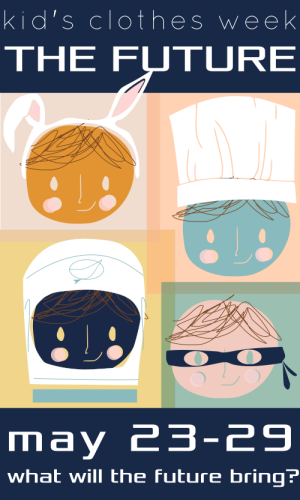
Welcome to day two of the Kids Clothes Week Challenge! I hope you found an hour (or more) yesterday. The sewing momentum is starting to build, I can feel it. Have you seen the flickr pool yet? Some amazing handmade clothes are popping up there (and even some tutorials)!

To keep the momentum going into next week--and beyond--Liesl, of Oliver + S fame, has offered you, my lovely readers and kcwc sewers, 20% off all their paper patterns! The offer ends right after kcwc ends (midnight ET on October 15), so if there is some pattern you've been eyeing, now's the time to snatch it up! The coupon code is KCWC20--just type it in when you check out!

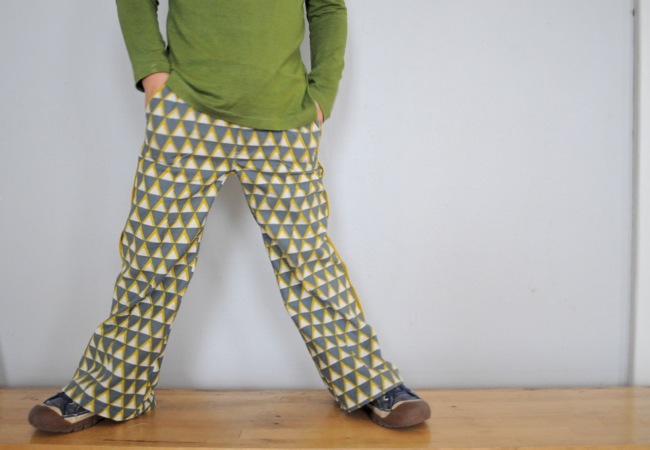
colorblocked striped top and gingham pants

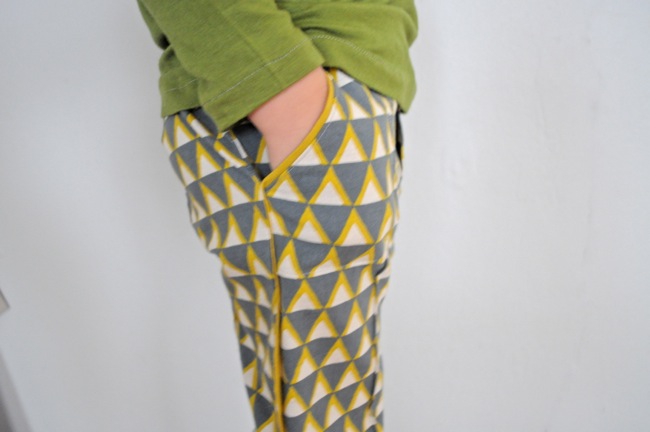
Okay, what did I sew? An upcycled shirt and some basic lined pants for my five year old boy. I really didn't intend for these two things to be worn together when I sewed them, but my son had other plans. Let's start with the shirt...

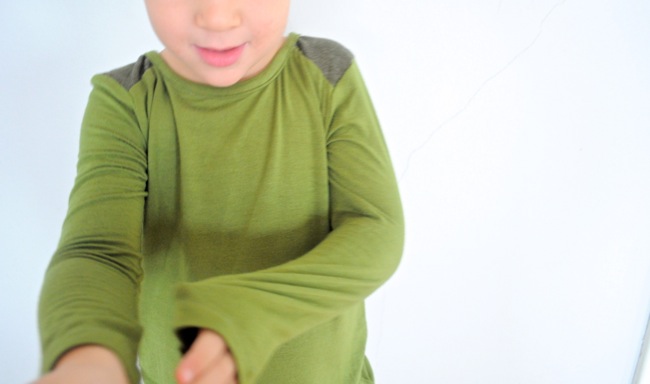
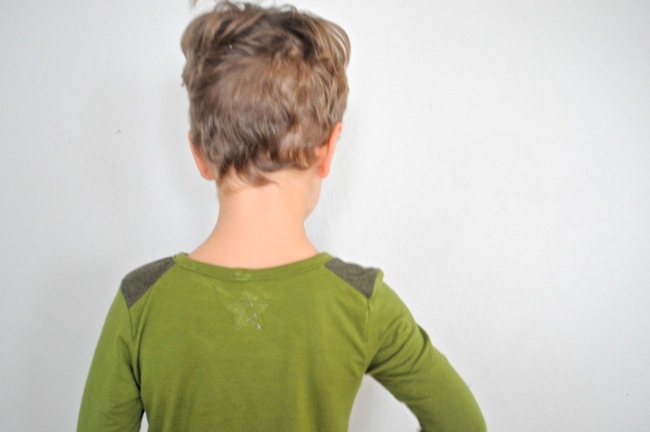
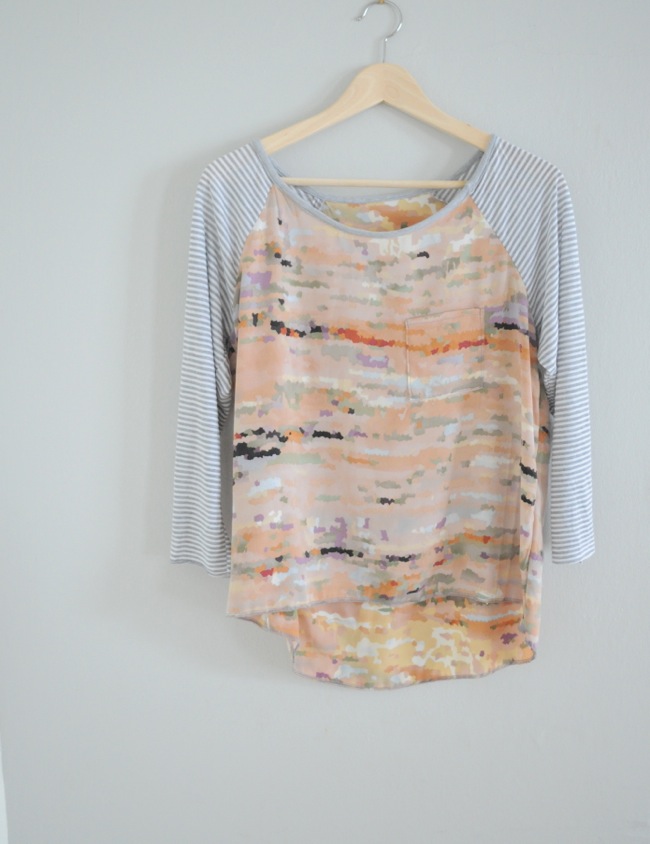
striped top with multi-colored ribbing

pattern: Flashback Skinny Tee by Made by Rae

fabric: I sized down an old shirt of mine that never fit quite right.

sewing: The t-shirt material is the super thin jersey. I love wearing it (and so does my son) but I get nervous sewing with it. There were a few incidents where my sewing machine  decided to eat the fabric rather than sew it, but it worked out in the end. I loved choosing all the different colored ribbing to finish the shirt. Boy's clothes you see in stores can be so serious (gray, blue, gray, blue), so it's nice to make something silly and happy--like little boys!

lined pants

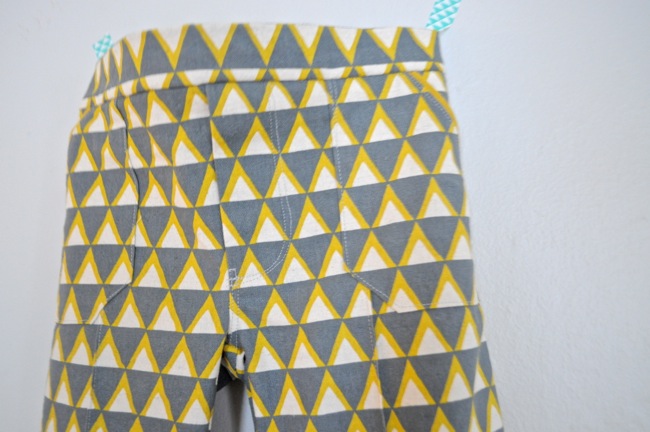
pattern: My go-to pants pattern from Happy Homemade vol. 2. I've made it so often I just drafted a combination of the boy's shorts pattern (i) with the girl's pants pattern (o) for each size.

fabric: Big gingham on the outside and olive jersey on the inside!

sewing: I can sew this pattern in my sleep, which is what must of what happened because I ending up with two left legs when I sewed the lining. I didn't mark the right side of the jersey fabric and it is hard to tell right from wrong on solid jersey. Whatever, no one is going to see it, right? Trying to get the lining to sit right in the pants was super fiddily, but now that they are sewn up you can't tell the pants have two left legs (I hope).

woohoo!

He can't at least!


kcwc spring 2012: day two

color block pocket

Yesterday's outfit was very subdued, but today we're going color block crazy! I am very happy with how this whole outfit turned out. I didn't imagine the skirt and the top going together when I made them, but they do! Michael Kors would say it's very on trend (then Nina Garcia would tear it apart) and I suppose it is, but it's still little kid too.

ayashe shirt

the pattern: ayashe blouse pattern by figgy's

the fabric: vintage sheet

the sewing: For as complicated as this shirt looks, it wasn't all that difficult. I did have to wrestle with the collar a bit, but it turned out well enough. My fabric cutting can get kind of sloppy and the collar's measurements need to be exactly right to work. Next time I'll pay a bit more attention when I'm cutting it out. There will be a next time, because really this was supposed to be a muslin. I made the 6/7 size for my 6 1/2 girl and it just fits, but I'm guessing it won't by the end of the summer. The only thing I changed was to finish the sleeves in bias tape. Oh and I skipped the elastic at the bottom too.

color block skirt

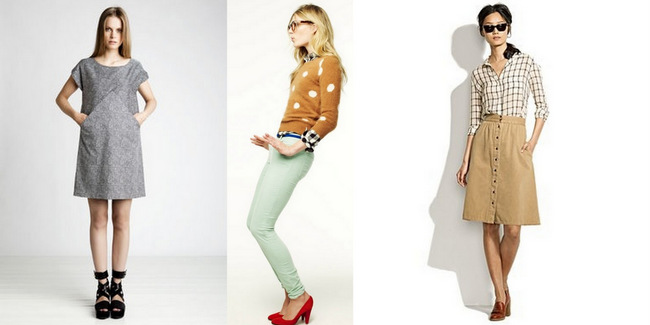
the pattern: I didn't really use a pattern, but kind of used this skirt as a guide.

the fabric: The top part is from an old shirt, the orange is some weird, slinky, cottony stuff I picked up at the thrift store, and the pockets are quilting cotton. Every bit came from my scrap bin.

the sewing: I saw this photo of a color block dress a while back on pinterest and immediately wanted to make a similar skirt or dress for my daughter. I picked through my scrap bin and came across the orange and light blue, which I loved together, but had very little of either. I pieced them together like a quilt and slapped some pretty aqua pockets on top. I fussed with the ratio of light blue to orange for far too long. Finally I said screw it, sewed elastic in, and called it done.

color block details

If you follow me on twitter or facebook you know already, but this is the biggest kcwc yet!  With 640 participants, not only is it the biggest kcwc, but it is almost twice as big as any we've ever had! When I ask you get to get the word out, wow! you really get the word out there!  You guys are awesome. The flickr pool is starting to fill up and any minute now it's going to explode with amazing kid clothes. Here are today's beauties:

1. me so crazy vintage twirl skirt

2. figgy's sunki tunic

3. cars board shorts

4. houndstooth cardigan

edited to add: oops, just check the flickr pool and it already exploded.


guest post: stuff n’ stay for creative play

Today's tutorial comes from an amazing Australian seamstress, Sophie from Cirque du bebe. Sophie is new to sewing, though you would never believe it looking at the clothes she makes. They are always super hip and beautifully finished: like this hoodie and this outfit and this stylish number.  She can pick a bold print and make it look so effortless, so right. For example she pairs a crazy-glasses-wearing-man print with stripes, pastel blue, and safety orange and it's awesome! So I knew whatever she was going to come up with for a tutorial was going to be good, but I didn't know it was going to be this good...

** * * * * * * * * * * * * * * * * * * * * * * * * * * * * * * * * * * * * *
Hello, Sophie here from Cirque Du Bebe. Today we are going to take an ordinary kiddie shirt and transform it into 'lift-the-flap' clothing. Because, lets face it, those books are more fun! You will learn how to make a simple 'stuffie' (completely removable for washing) and watch your kids turn it into an interactive prop for creative play. You could even make a few and rotate them.


1. Get inspired. What do you think would make a fun prop? A moustache? An ice-cream? An envelope with a felt letter? Your fabric stash can be a good place to draw inspiration...do you have some stripes that scream villain or conveniently, a fabric with a ready made prop lurking in the print (see telephone). You could put something noisy inside; crinkly plastic, a bell. The cord can become part of the game too! You guys are the creatives. Go wild.

2. Gather materials, including some stuffing to fill the shape with.

3. Cut the cord and attach velcro. The cord should be long enough to reach where the prop will be used (but not long enough to go around a neck) plus an extra inch that will be fixed inside the stuffie. Cut a narrow strip of velcro (about an inch) and secure it to one end of the cord with a zig-zag stitch, going up and back several times.

4. Draw the sewing line. This will be the perimeter of your stuffie when it is poofed up. This line should be just out from the edge of the image so you don't lose any of it when you sew.

5. Cut the shape just outside the sewing line this time. This will become the seam allowance.

6. Flip over and re-draw your sewing line on the wrong side.

7. Cut the felt backing. Pin the fabric to your felt and cut around the shape.

8. Attach velcro to felt backing and to shirt. Sew a couple of strips of velcro to the back of the felt backing. Cover a generous area...the stuffie needs to be easy to slap on in a hurry (when you have to hang that telephone up fast). Now for the shirt. When considering where to place the complimentary velcro strips see if there is somewhere in the fabric design to disguise black or white velcro, like in stripes as above. This just makes for a slightly neater look but its not a biggie if its not possible. Pin and sew the velcro on, making sure the stuffie has plenty of area to stick to.

9. Attach cord and sew stuffie. With your fabric right side to right side (velcro facing outside), sandwich the cord between the two layers and pin in place, leaving an inch hanging outside and the rest on the inside. Shut the lid and pin around the remainder of the shape. Sew your Stuffie following the line you drew earlier, making sure the cord is still tucked inside. Leave a gap in the stitching large enough to turn stuffie back the right way.

10. Now stuff it. Stuff it real good.

11. Close the opening with small neat hand-stitching, using co-ordinating thread.

12. To add a little extra tactile goodness and give the stuffie a quilted effect, pick a couple of lines to emphasize and sew along them.

Congratulations...if you made it this far you didn't stuff up. Sorry. Now stick that stuffie on and enjoy the entertainment.

guest post: tutorial for a cuffy outfit

I want to welcome Sophie from Roubidou as our first guest poster this week! I have been watching her sew tiny, beautiful clothes all through her pregnancy: quilted jackets and fuzzy vests and amazing ensembles! Even though she was very, very pregnant, she agreed to write up a tutorial for us. And wow, what a tutorial it is! A cuff is a lovely detail and now you can put it on a shirt, a jacket, a pair of pants, or all three. After you've finished reading the tutorial she made, go have a look at the lovely baby she just made! Congratulations Sophie!
* * * * * * * * * * * * * * * * * * * * * * * * * * * * * * * * * * * * * *

Hello dear Elsie Marley readers,

When Meg asked me to do a little tutorial for KCWC I was pleased as punch not only for an opportunity to be a guest on one of my favourite blogs but also to be part of this autumn’s sewing frolic after all (our daughter is supposed to arrive on the 10th). I sewed the outfit to introduce three slightly different types of cuffs and hope you can follow the instructions without too much effort. I’m a self-trained dilettante so the tutorial below is merely what worked for me.

Happy KCWC,

Sophie

* * * * * * * * * * * * * * * * * * * * * * * * * * * * * * * * * * * * * * *

Shirt:

1. Sew the shirt as indicated by your pattern ignoring the instructions for the sleeve finish. Look at the given seam allowance and the sleeve finish method of the pattern, calculate the length of your cuff plus seam allowance to determine how much you’ll shorten the sleeve before adding the cuff and placket. To save fabric you could do this before cutting the fabric. If you have your little client ready and willing have her/him put on the garment to tailor the sleeves according to his/her measurement.

2. Make a pattern for you placket and cut out the placket twice (you’ll want mirroring plackets unlike the ones in the photo).

3. Place the placket with its ride side onto the wrong side of the sleeve and sew a little rectangle. Slash through the placket and sleeve down centre right between the stitches and carefully clip to the corners of the rectangle.

4. Turn the placket to the right side of the fabric and press. Now it’s likely to become a bit finicky. I very much prefer sewing for kids since it is so much quicker, pieces are easier to handle and you need less fabric. But sewing this placket, especially for a size 2 shirt, I wished I was sewing an adult sized shirt. To help you through this fabric origami it might be good idea to have a ‘real’ shirt with a placket lying next to you for visual guidance.

5. Fold back the long edge of the shorter side of the placket and pin in place. Then sew the folded edge in place stopping at the top of the gap. Tie the thread ends securely on the wrong side.

6. Next, fold the other side of the placket across the shorter side and press under the long edge. Fold back so that the pressed-under edge is on the sewing line and pin in place. Now, fold under the top pointed end,and press. Sew the long folded edge and make sure the underside of the placket is not caught in the stitching. Stitch an X at the end of the placket. Finish by tying the thread ends on the wrong side.

7. Now, gather the sleeve, stitching along the sleeve line with the longest stitch available on your sewing machine. Pull on the threads to manipulate the sleeve.

8. Cut out the cuff in the desired size. I used a one-piece cuff cut from the fabric in one piece and applied fusible interfacing to the half of the cuff that will be the upper cuff. Fold the seam of the non-interfaced side and press. Next sew the cuff onto the sleeve, right side to right side and trim the seam allowance. It’s important that you have an overlap as large as your seam allowance on both sides.

9. Fold and press the cuff to itself, right side to right side, so the folded side of the cuff comes to the sleeve-to-cuff seamline. Sew the ends in line with the two openings, cut the seam allowance, and press the seams open.

10. Trim, turn and press the cuff to the right side. I sewed the folded under cuff in place by machine, but if you want an invisible finish for your could,  hand stitch the folded edge on the inside with a blind-stitch or a slip-stitch.

11. Make a buttonhole on the upper side of the cuff and sew a button on the underside of the cuff. Repeat for the other sleeve.

Jacket:

1. Sew your jacket bearing the same alterations in mind as with the shirt.

2. Now on to the band cuff. Cut the cuff in the desired size, you’ll have two pieces of different fabric per cuff. Since the outside fabric is already thick I didn’t use fusible interfacing, depending on your fabric you might want to apply interfacing to the upper cuff. Pin the two pieces together, right sides facing, and turn under a seam allowance on the under cuff and press. Stitch the lower edge together. Trim and press open the cuff. 


3. Then sew the short side ends together, trim and press again. 

4. If you want to gather the sleeve before sewing on the cuff, do so now. Then sew the sleeve to the upper cuff, right sides facing. Trim and grade the seam. 

5. Press the seam allowance towards the cuff. Turn the cuff inside along the foldline, wrong sides facing. On the inside of the sleeve sew the under cuff in place either by machine or handstitch.

6. Repeat for the other sleeve and that’s it. 

Pants:

1. This cuff is sewn very similar to the shirt cuff. The main construction difference is that this is a lapped cuff which is used for bound or faced openings. I didn’t use any of these openings since I lined the pants and had my raw seams of the opening sandwiched between the lining and the main fabric. With a lapped cuff you’ll have to sew the cuff onto the knee sleeve with an overlap where the button will be. Sew your pants bearing the same alterations in mind as with the shirt

2. Now to the cuff. Start by sewing a line of piping (with your zipper foot) long enough for two sleeve cuffs. Then cut the cuffs in the desired size (i simply used a cereal bowl to trace the round edges). You’ll need four pieces altogether, I used the same fabric inside as outside in order not to distract from the piping. Pin the piping to the right side of one sleeve cuff. Stitch close to the stitching line on the piping, sewing with your zipper foot.

3. Turn under a seam allowance on the under cuff and press. Place the under cuff over the piping, right sides facing an sew the outer line of the cuff close to the previous stitch and the piping again with your zipper foot. Trim, turn and press the cuff.

4. Now attach the cuff to the knee sleeve as you did with the shirt but leave a seam allowance on one side and an overlap (long enough for your button) on the other side. Sew the cuff to the knee sleeve as you did with the shirt. Fold and press the cuff to itself, right side to right side, so the folded side of the cuff comes to the knee-sleeve-to-cuff seamline. Sew the shirt end in line with the opening and trim. Sew the overlap end along from the knee-sleeve to-cuff-seamline and then down to the cuff. Clip the corners and press the seams open. Push to the right side and finish the edge of the under cuff either by hand or machine.

5. Make a buttonhole on the upper side of the cuff and sew a button on the underside of the cuff. Repeat for the other knee sleeve.

And ready is a cuffy outfit.