Archive for the ‘tutorials’ Category

diy summer passport

diy summer passport

I mentioned last week that I was thinking about making a summer passport. And would you look at that: I did! It was super easy and I'm going to tell you how to do it.

small moleskine

diy summer passport

materials:

  • a small moleskine plain journal with a kraft paper cover. They are called Cahiers and are sold in sets of three (for 7 bucks).
  • crayons, markers, pencils, whatever
  • a list of activities (see below)
  • stickers, or a date stamper

summer passport diy

directions:

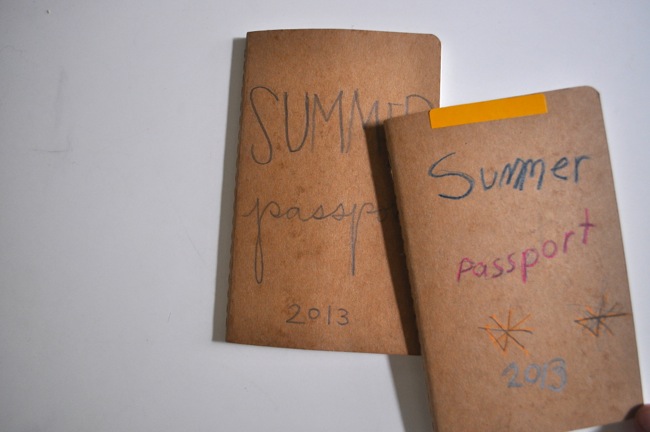
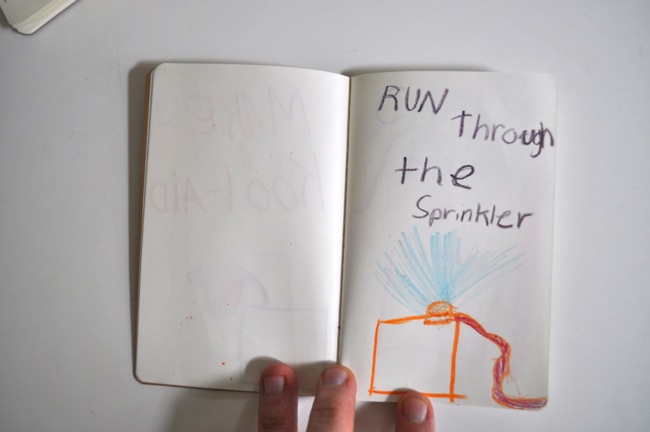
1. Make your cover. We went with the basic, Summer Passport 2013. You could get a little more exciting, like THIS IS GOING TO BE THE JONES' BEST SUMMER EVAR!

summer passport diy

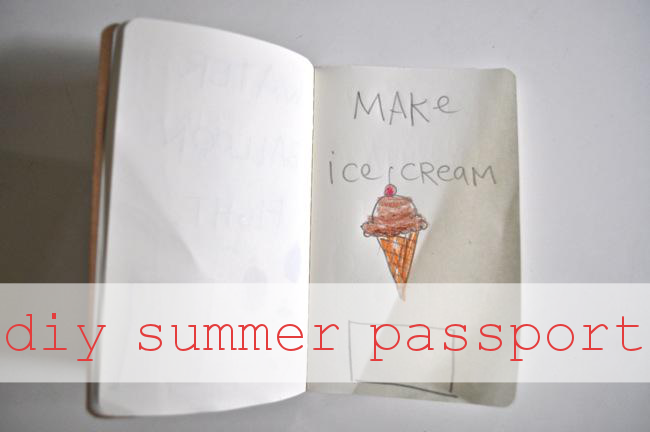
2. Write something fun to do on every right hand page. This ends up being about 30 activities, which I think is doable for summer. It also leaves the left page open for writing about when you did that activity (optional, obviously).

summer passport diy

3. Draw a box under the activity. This is where you will put the stickers (or stamp the date) when you do that activity. If you plan to do something often, make sure to draw a big box. My daughter seems to think we will be going to the pool a lot this summer. :)

summer passport diy

4. Go do something! Here's a list of 40 things to get you started:

list of summer activities

  1. run through the sprinkler
  2. blow bubbles (last year, we made super big bubbles!)
  3. eat watermelon (in star form maybe?)
  4. make a giant fort
  5. make grape sculptures
  6. eat corn on the cob (and make your own awesome holders!)
  7. buy a treat from the ice cream truck
  8. go to the farmer's market
  9. sign up for your library's summer reading program
  10. play in the rain
  11. write a letter to Grandma
  12. make your own gummy treats
  13. wash the car
  14. find a new park in your town
  15. go swimming!
  16. make paper airplanes
  17. learn cats cradle
  18. paint with chalk paint
  19. build a fairy house
  20. feed the ducks
  21. get your face painted
  22. watch fireworks
  23. play sidewalk simon
  24. catch fireflies
  25. play badmiton
  26. sail boats down a tin foil river
  27. water balloon fight!
  28. be a super spy--make invisible ink
  29. make ice cream or popsicles
  30. make your own stickers
  31. exploding paint bombs!
  32. go to a local fair
  33. have a magic potion lab
  34. make saltwater taffy
  35. have a lemonade stand (or a tattoo stand!)
  36. camp in the backyard
  37. go fishing
  38. go bowling
  39. see a concert in the park
  40. pick strawberries


What are you doing this summer? Add your ideas in the comments!


painterly skirt tutorial

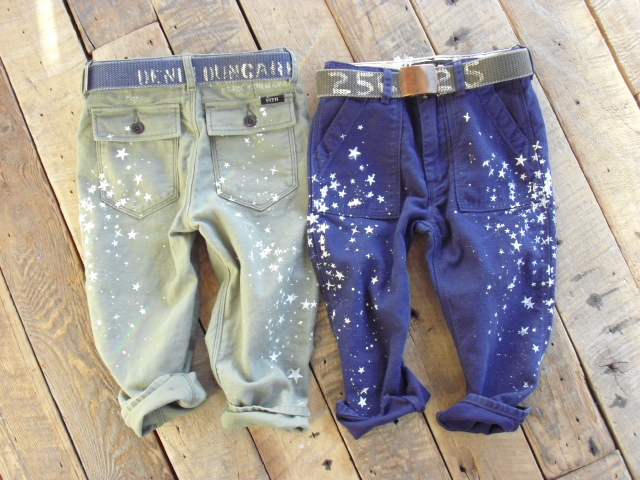
For my contribution to Skirt Week 2012, I made this little tutorial for turning an old, rather boring skirt into something a bit more interesting. Sometimes you don't need to make a new skirt, but you need to liberate one from the back of your closet. I had planned on doing a tutorial for a button placket, but then I saw this picture and could not stop thinking about it:

These pants are from a shop in New York that specializes in super awesome Japanese children's clothes. The idea is so simple and so effortlessly cool that I had to steal it.

painterly skirt tutorial

painterly skirt

materials:

  • 1 unloved skirt
  • a bit of cardboard or freezer paper
  • paint of your choice, fabric or acrylic or even house paint*
  • stamps
  • very small paint brush

painterly skirt materials


directions:

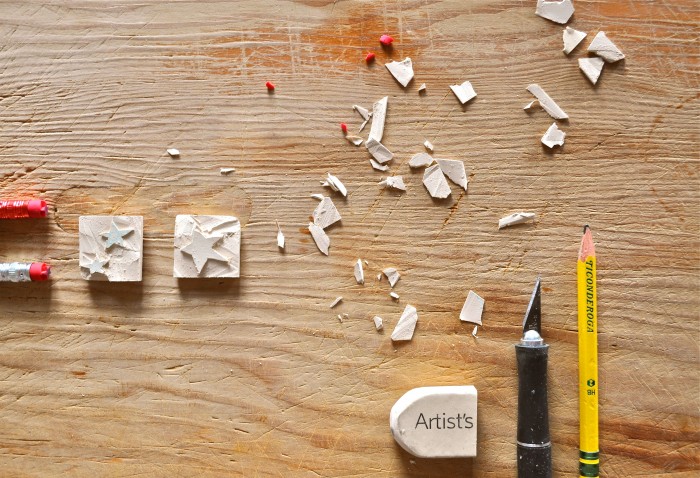
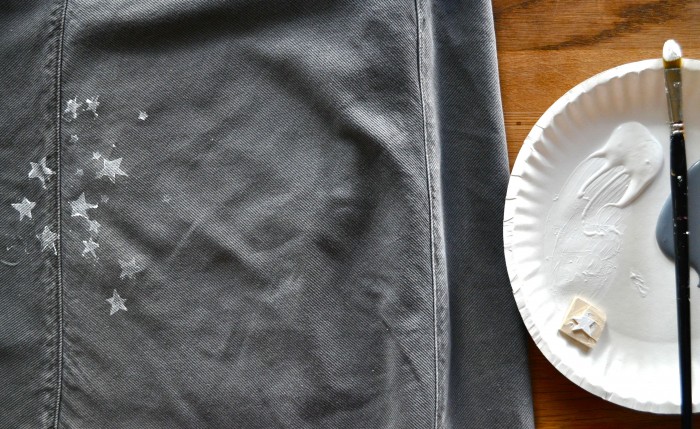
1. The first thing I did was carve some starts out of an old eraser. If you've never done this before it may sound hard, but I assure you it is not. I carved two stamps from a big eraser and two from the tiny erasers on a pair of new pencils. It took me all of 10 minutes. There are many good tutorials for carving stamps from erasers out there (this one and this one for example). The stamp you make should be quite small, so stick to a simple shape--stars work well!

starting the stars

2. Put a piece of cardboard under where you will be stamping, or you can iron a bit of freezer paper to the back. You need something under your design, so the paint doesn't bleed through to the other side.

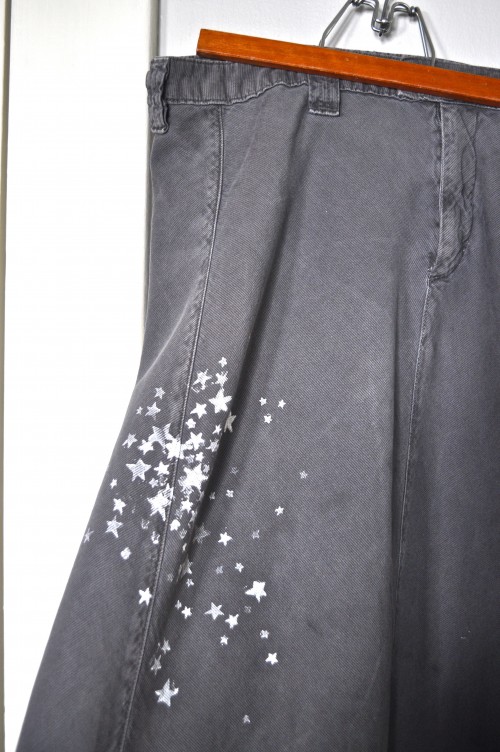
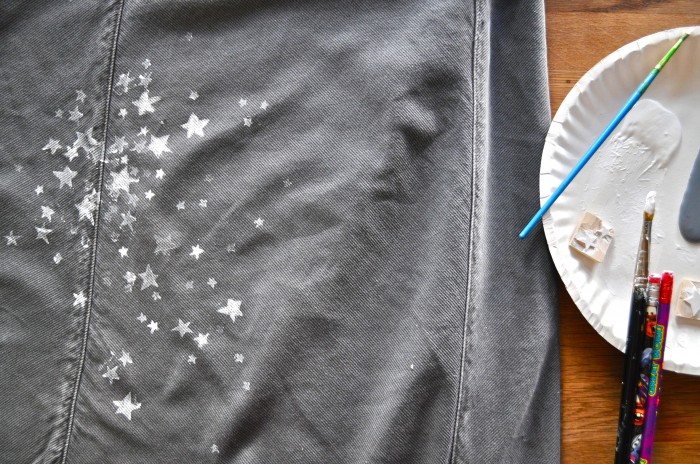
3. Start stamping! You can be as fussy or as messy as you want. The look we are going for is paint wiped on the side of your skirt, so there aren't too many rules you have to follow. It looks nice if the stamps are concentrated a bit in one area and then fade out towards the edges.

stars painted

3. After you have stamped to your heart's content, take a very small paintbrush and go over some of the stamps with more paint. This will make some of the stars stand out better and give the design a little more dimension.

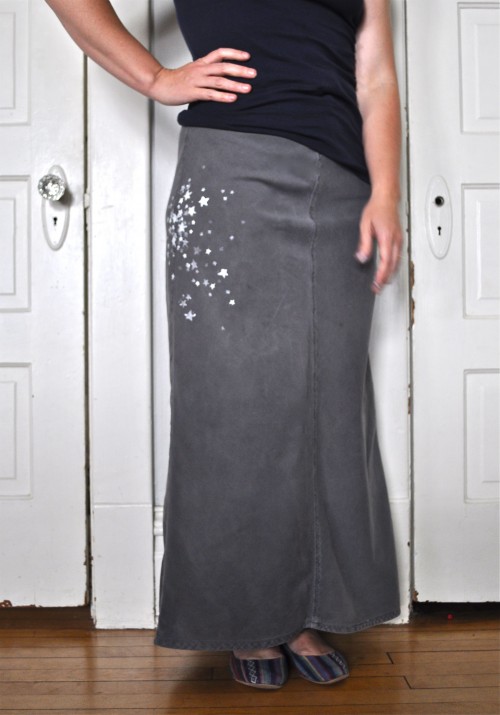
4. Let the paint dry and go over it with an iron to set it.  Waalaa! a new skirt! One that will be loved and worn again!

before after painterly skirt

*a note on paint: I don't paint on my clothes very often, but when I do (like here and here) I like to use a product called fabric meduim. You mix the meduim with any acrylic paint and it makes it into a fabric paint. A good friend of mine turned me on to it. Another good friend told me to get out of the not-so-great craft acrylic paint aisle and go to the actually-an-artist acrylic paint aisle: the colors and the quality are better.

painterly skirt after


color block pillow tutorial

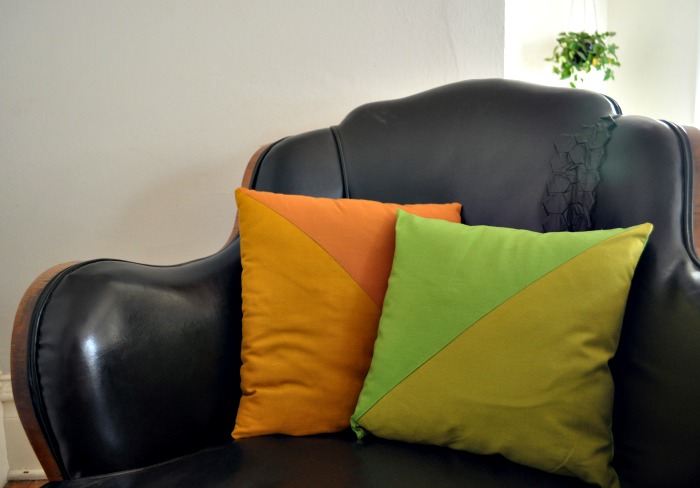
color block pillow

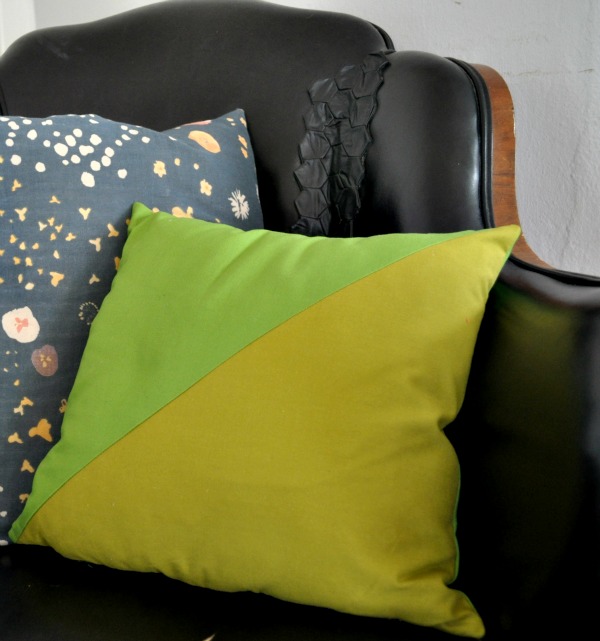
Here is a little project to spring up your home.  I made this pillow in springy greens, but any colors would of course work. Ticking would look very nice, with the stripes going opposite ways. The pillow is based on a simple quilt square (does it have a name?) and comes together super fast.  Happy Spring!

color block pillow
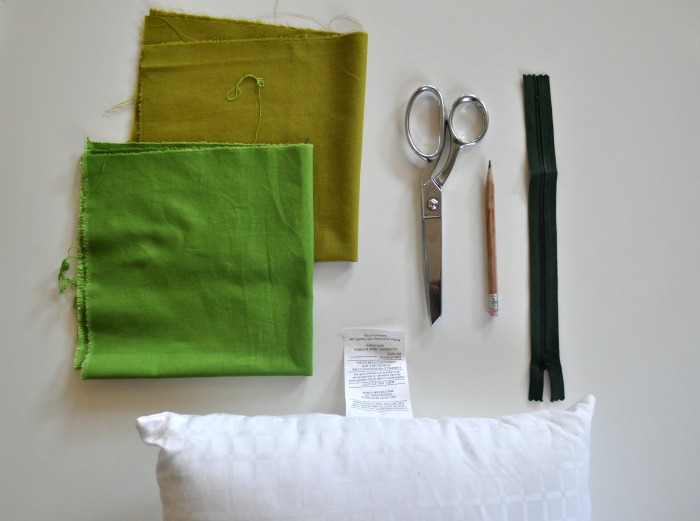
color block pillow materials

materials:

  • two squares of fabric slightly larger than your pillow
  • square pillow form
  • zipper slightly smaller than your pillow


directions:

1.  Cut your fabric 2 inches larger than your pillow. For example: my pillow was 13in square, so I cut my fabric into 15in squares.
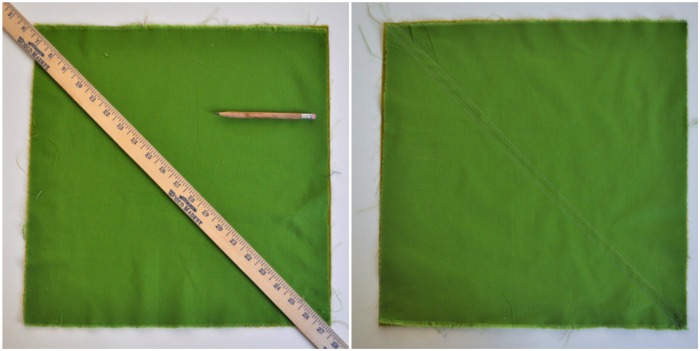
color block pillow step one and two

2. Put the squares together, right sides facing. Using a straight edge, draw a line diagonally across the fabric. No one will see the line, so you can use a regular pencil or pen.

3. Sew 1/4in from the line. First sew on one side of the line, and then on the other. You will have two seams, one on each side of the line. This is shown more clearly in the photo below.
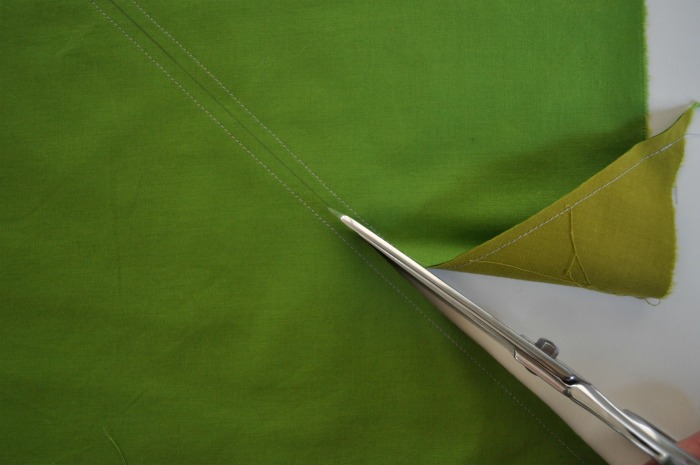
color block pillow step three

4. Cut directly on the line you drew.
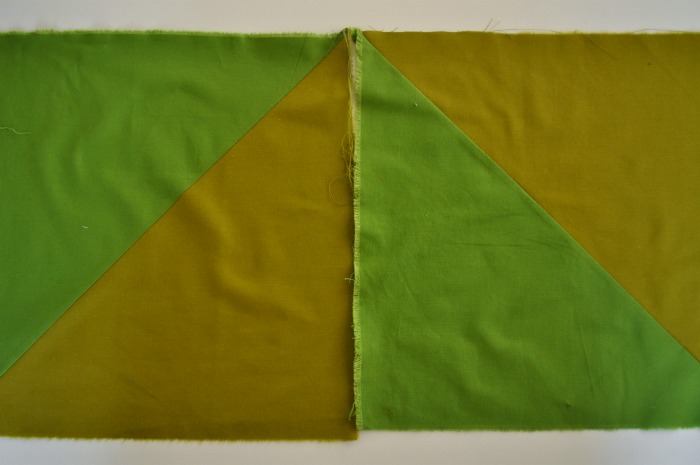
color block pillow step four

5. Ta Da! You now have two squares. Open them up and press the seam to one side--the side with the darker colored fabric.
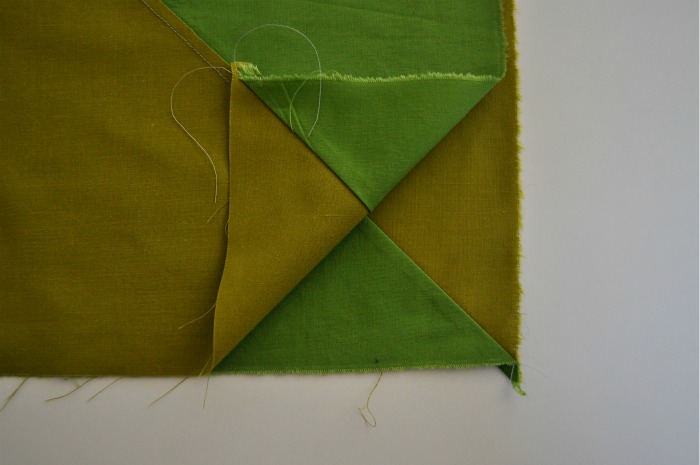
color block pillow step five

6. Now you have a choice. You can line the squares up, right sides facing, with the seams also alined like I did in the photo above. Or you can arrange it so the triangles are oriented differently on each side--the seams will not line up, but will make an X. Play around with it and see what you like. But unless you have a clear fiberglass couch no one is going to see both sides at once.

7. I am not going to explain how to do the zipper, because there is a good tutorial that does it already--Sewing 101: Zippered Throw Pillows. This is the method I use for putting zippers in pillows and it is dead easy. There are other ways that look a bit nicer, but this one is super fast and hard to screw up. I encourage you to try it if you haven't used zippers before--you will succeed, I know it!

color block pillow done!

8. Try the pillow on your pillow form. It might need some taking in. I had to take mine off and sew it a bit smaller to make it fit. Hey look, you're done! And you made a super chic, color block, geometric, trendy as all get out pillow. Your couch will thank you.
me hearty eye patch tutorial

"I only have eye for you" pirate valentine

me hearty eye patch tutorial

I was going to make super hero heart masks for all the kids in my daughter's class (like this fantastic one), but they were fussy and each one was taking way too long. My daughter and I came up with the eye patch idea together. An hour later I had whipped up 17 of them. Super fast, super easy, good for girls and boys (and grown ups too), and not full of sugar. Eye patches arrrrgh the best!

materials:

  • felt, 2 3in squares per patch
  • 1/8in wide elastic, 16-18in piece per patch
  • straight edge

heart eye patch tutorial

1. Cut two 3in squares of felt for each eye patch you are making. Then cut a heart from one out of each two squares: if you are making 5 eye patches, you started with 10 squares and now will have 5 hearts and 5 squares.

heart eye patch tutorial

2. Take a heart and place a straight edge (I used an envelope) across the middle. Then tilt the edge 1/4 inch up on one side and 1/4 inch down on the other. Make a tiny mark on each edge. This is where the elastic will be attached to the patch. Really you only need to mark 2 or 3hearts. After that you can just eyeball it (ha!). No really.

heart eye patch tutorial

3. Place the marked heart on top of a felt square. Cut a piece of elastic so it's 16-18 inches, smaller for smaller people bigger for bigger people.  Sew 1/8 inch from the edge all around the heart, inserting the elastic where indicated.

heart eye patch tutorial

4. Trim away excess felt, holding the elastic as you cut (so it doesn't get cut, silly).

heart eye patch tutorial

5. That's it! No go make 20 more because Valentine's day is tomorrow! Here are a few awful pirate puns you can use:

Will you be my matey?

You arrrrgh my Valentine!

I want to capture you, Valentine!

Yarrrr the best!

I treasure you!

I'd walk the plank for you!

Ahoy, me hearrrrty

pirate valentine

guest post: stuff n’ stay for creative play

Today's tutorial comes from an amazing Australian seamstress, Sophie from Cirque du bebe. Sophie is new to sewing, though you would never believe it looking at the clothes she makes. They are always super hip and beautifully finished: like this hoodie and this outfit and this stylish number.  She can pick a bold print and make it look so effortless, so right. For example she pairs a crazy-glasses-wearing-man print with stripes, pastel blue, and safety orange and it's awesome! So I knew whatever she was going to come up with for a tutorial was going to be good, but I didn't know it was going to be this good...

** * * * * * * * * * * * * * * * * * * * * * * * * * * * * * * * * * * * * *
Hello, Sophie here from Cirque Du Bebe. Today we are going to take an ordinary kiddie shirt and transform it into 'lift-the-flap' clothing. Because, lets face it, those books are more fun! You will learn how to make a simple 'stuffie' (completely removable for washing) and watch your kids turn it into an interactive prop for creative play. You could even make a few and rotate them.


1. Get inspired. What do you think would make a fun prop? A moustache? An ice-cream? An envelope with a felt letter? Your fabric stash can be a good place to draw inspiration...do you have some stripes that scream villain or conveniently, a fabric with a ready made prop lurking in the print (see telephone). You could put something noisy inside; crinkly plastic, a bell. The cord can become part of the game too! You guys are the creatives. Go wild.

2. Gather materials, including some stuffing to fill the shape with.

3. Cut the cord and attach velcro. The cord should be long enough to reach where the prop will be used (but not long enough to go around a neck) plus an extra inch that will be fixed inside the stuffie. Cut a narrow strip of velcro (about an inch) and secure it to one end of the cord with a zig-zag stitch, going up and back several times.

4. Draw the sewing line. This will be the perimeter of your stuffie when it is poofed up. This line should be just out from the edge of the image so you don't lose any of it when you sew.

5. Cut the shape just outside the sewing line this time. This will become the seam allowance.

6. Flip over and re-draw your sewing line on the wrong side.

7. Cut the felt backing. Pin the fabric to your felt and cut around the shape.

8. Attach velcro to felt backing and to shirt. Sew a couple of strips of velcro to the back of the felt backing. Cover a generous area...the stuffie needs to be easy to slap on in a hurry (when you have to hang that telephone up fast). Now for the shirt. When considering where to place the complimentary velcro strips see if there is somewhere in the fabric design to disguise black or white velcro, like in stripes as above. This just makes for a slightly neater look but its not a biggie if its not possible. Pin and sew the velcro on, making sure the stuffie has plenty of area to stick to.

9. Attach cord and sew stuffie. With your fabric right side to right side (velcro facing outside), sandwich the cord between the two layers and pin in place, leaving an inch hanging outside and the rest on the inside. Shut the lid and pin around the remainder of the shape. Sew your Stuffie following the line you drew earlier, making sure the cord is still tucked inside. Leave a gap in the stitching large enough to turn stuffie back the right way.

10. Now stuff it. Stuff it real good.

11. Close the opening with small neat hand-stitching, using co-ordinating thread.

12. To add a little extra tactile goodness and give the stuffie a quilted effect, pick a couple of lines to emphasize and sew along them.

Congratulations...if you made it this far you didn't stuff up. Sorry. Now stick that stuffie on and enjoy the entertainment.